Alligator Cracking: What It Means for Your Sarasota Parking Lot
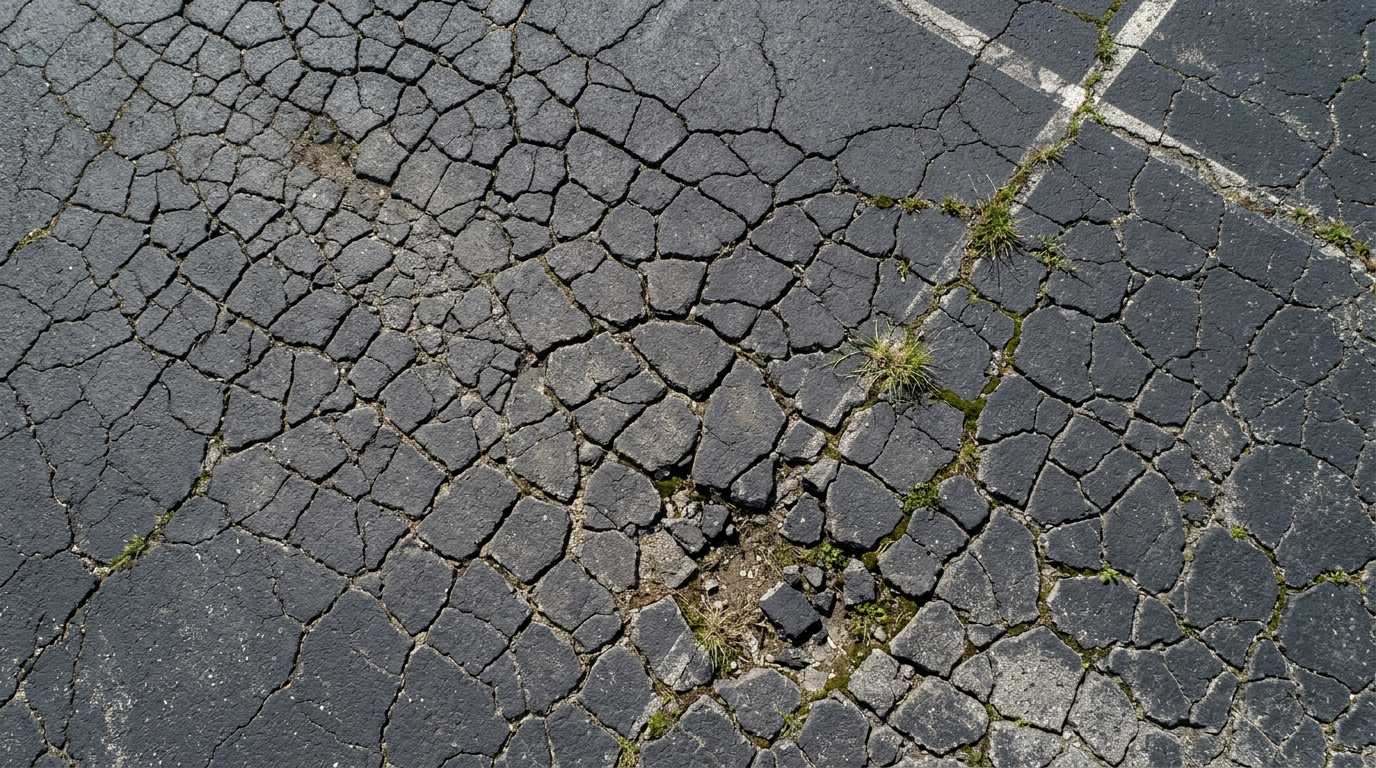
If you’ve noticed interconnected cracks forming a pattern resembling alligator skin across your Sarasota parking lot, you’re dealing with one of the most serious forms of pavement distress. Alligator cracking, also known as fatigue cracking, signals that your asphalt has reached the end of its structural capacity—and in Sarasota’s humid subtropical climate with intense UV exposure and seasonal storms, this deterioration can accelerate rapidly.
Unlike simple surface cracks that affect only the top layer, alligator cracking indicates structural damage that extends deep into your pavement system. For Sarasota business owners who depend on attractive, functional parking areas to serve tourists, residents, and seasonal visitors, understanding this pavement failure is crucial for making informed repair decisions.
John Wells and the APC Asphalt Paving team have diagnosed and repaired countless cases of fatigue cracking throughout Sarasota County, from high-end Siesta Key commercial properties to busy downtown parking facilities near the Van Wezel Performing Arts Hall. This comprehensive guide will help you understand what alligator cracking means for your pavement and when repair versus reconstruction makes financial sense.
What Causes Alligator Cracking in Sarasota Parking Lots
Fatigue cracking develops when asphalt pavement experiences repeated loading beyond its structural capacity. Think of it like bending a paperclip back and forth—eventually, the material fails from fatigue. In parking lots, this happens when the pavement structure is too thin for the traffic loads it carries, or when the foundation has weakened over time.
Sarasota’s coastal environment creates unique conditions that accelerate this process. The combination of intense summer heat (often exceeding 95°F), heavy seasonal rainfall during our June-through-September wet season, and salt-laden air from the Gulf of Mexico creates a perfect storm for pavement deterioration. When temperatures soar for months, asphalt becomes more flexible and susceptible to permanent deformation under load.
The pattern typically starts as small, isolated cracks in areas of heaviest traffic—often near store entrances or loading zones at shopping centers along Fruitville Road or University Parkway. As vehicles continue to pass over these weakened areas, the cracks multiply and connect, forming the characteristic interconnected pattern. Water infiltration through these cracks is particularly damaging during Sarasota’s afternoon thunderstorms, when several inches of rain can fall in just an hour.
What makes alligator cracking different from other crack types is its bottom-up progression. The cracking actually begins at the bottom of the asphalt layer, where tensile stresses are highest, then works its way to the surface. By the time you see the alligator pattern on top, significant structural damage has already occurred throughout the pavement depth.
This is especially problematic for Venice area properties, where the combination of an aging retiree population driving heavier vehicles and increased seasonal tourism traffic puts additional stress on parking lot surfaces that may have been adequate when originally constructed decades ago.
Identifying Structural Damage vs. Surface Issues
Recognizing the difference between surface-level cracking and true structural failure is critical for Sarasota property owners. Surface cracking might include thermal cracks from temperature changes or minor shrinkage cracks that can be effectively sealed. These typically appear as single, isolated cracks without the interconnected pattern.
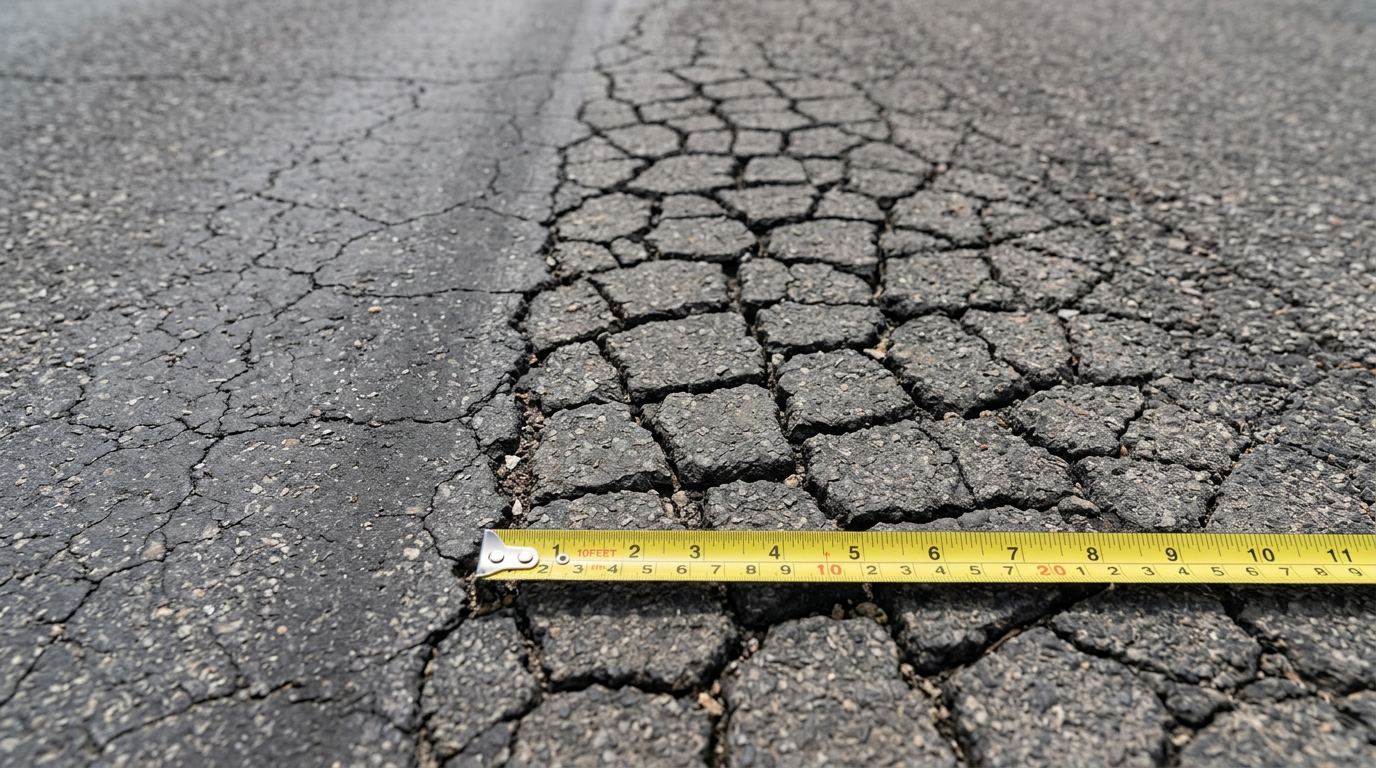
Alligator cracking, however, presents distinct characteristics that signal deeper problems. The cracks form irregular, multi-sided blocks resembling alligator skin, typically ranging from one to three feet in diameter. These areas often show signs of pumping—where water and fine materials are forced up through the cracks under traffic loading, leaving telltale stains or deposits on the surface.
In Sarasota’s climate, you might also notice that alligator-cracked areas hold water longer after rain events, creating breeding grounds for mosquitoes and safety hazards for pedestrians. This is particularly concerning for businesses near Sarasota Bay or along the Intracoastal Waterway, where standing water can become a significant liability issue.
The interconnected cracks allow water to penetrate deep into the pavement structure, accelerating the deterioration of both the asphalt and underlying base materials. During hurricane season, when Sarasota can experience sustained winds and driving rain, this water infiltration becomes even more destructive.
Another telltale sign is deflection under load. If you notice that alligator-cracked areas seem to “give” or flex when heavy vehicles pass over them, this confirms that the structural integrity has been compromised. This is particularly common in areas where delivery trucks or maintenance vehicles regularly travel, such as behind shopping centers along Clark Road or near the loading docks at Westfield Southgate.
The severity of alligator cracking is typically classified into three levels: low (cracks with minimal or no spalling), moderate (moderate spalling with some loose pieces), and high (extensive spalling with loose pieces that can be easily removed). Understanding this progression helps determine whether repair or reconstruction is the most cost-effective solution for your specific situation.
Repair vs. Reconstruction: Making the Right Decision
The decision between repairing alligator cracking and full pavement reconstruction depends on several factors specific to your Sarasota property. Professional crack sealing and surface treatments are only effective for early-stage fatigue cracking where the structural damage is minimal. Once the characteristic alligator pattern is well-established, these surface treatments become temporary band-aids rather than permanent solutions.
For low-severity alligator cracking covering less than 10% of your parking lot, full-depth patching may be appropriate. This involves saw-cutting the affected areas in square or rectangular patterns, removing all damaged material down to stable base, and replacing with new hot mix asphalt. The key is extending the cuts at least 12 inches beyond visible distress to ensure you’re reaching sound material.
However, when alligator cracking covers more than 25% of your pavement or appears in multiple locations, reconstruction typically provides better long-term value. This is especially true for Sarasota properties where the original pavement may have been under-designed for current traffic loads or where the base has been compromised by years of water infiltration during our intense hurricane seasons.
Climate considerations play a crucial role in this decision. Sarasota’s year-round construction season means you have flexibility in timing reconstruction projects, but the intense summer heat requires careful attention to paving temperatures and timing. APC Asphalt Paving typically recommends scheduling major reconstruction during the cooler months (November through March) when asphalt temperatures are more manageable and afternoon thunderstorms are less frequent.
The economic analysis should consider not just immediate costs but long-term performance. A properly reconstructed parking lot in Sarasota should provide 15-20 years of service life, while patching severely alligator-cracked pavement may require repeated repairs every 2-3 years. For businesses dependent on curb appeal—such as those serving Sarasota’s discerning tourist market along Main Street or near the Ringling Museum—the improved appearance of reconstruction often justifies the additional investment.
For Venice properties, where many businesses cater to retirees who expect well-maintained facilities, the professional appearance of a properly reconstructed parking lot can directly impact customer perception and property values.
Prevention and Long-Term Pavement Health
Preventing alligator cracking starts with proper initial design and construction. Many older parking lots in Sarasota were built with minimal thickness requirements that don’t account for today’s traffic loads or the area’s challenging climate conditions. Modern commercial parking lots should typically feature 4-6 inches of asphalt over 6-8 inches of aggregate base, depending on soil conditions and expected traffic.
Drainage management is particularly critical in Sarasota’s high-rainfall environment. Proper slope design (minimum 2% grade) and functional drainage systems prevent water from ponding and infiltrating through minor cracks. This is especially important given our area’s flat topography and seasonal flooding concerns near Phillippi Creek and other waterways.
Regular maintenance of drainage inlets and catch basins is essential, especially during the summer rainy season when debris from our abundant vegetation can quickly clog systems. Properties near Sarasota’s many golf courses should pay particular attention to organic debris that can accumulate and block drainage.
Preventive maintenance programs can significantly extend pavement life and prevent the conditions that lead to fatigue cracking. This includes regular crack sealing of minor cracks before they allow water infiltration, periodic sealcoating to protect against UV damage and oxidation, and prompt repair of any surface distresses.
For Sarasota property owners, timing maintenance activities around the seasonal tourism cycle can minimize business disruption. Many successful commercial properties schedule major maintenance during the slower summer months, taking advantage of lower tourist traffic while ensuring facilities are in peak condition for the busy winter season when snowbirds return.
Load management also plays a role in prevention. If your property regularly accommodates delivery trucks or heavy vehicles, consider designating specific travel lanes with enhanced structural design. This concentrates the heavy loads on pavement designed to handle them, protecting the rest of your parking area from premature fatigue.
Why Sarasota’s Climate Demands Expert Assessment
Sarasota’s unique coastal environment means that pavement distress patterns can be deceptive. What appears to be minor surface cracking may actually indicate significant structural problems accelerated by salt air exposure and thermal cycling. The combination of intense UV radiation, high humidity, and temperature swings between air-conditioned buildings and scorching pavement creates stresses that many property owners don’t fully understand.
APC Asphalt Paving’s experience throughout Sarasota County—from the upscale developments of Lakewood Ranch to the historic downtown district—provides the local knowledge necessary to accurately assess pavement conditions. We understand how different soil types, drainage patterns, and microclimates affect pavement performance in our area.
Our diagnostic approach considers factors specific to your location, whether you’re dealing with the sandy soils common near Siesta Key, the clay-heavy areas inland, or the unique challenges of properties near the Myakka River. This local expertise ensures that our recommendations address not just current problems but also prevent future issues specific to your site conditions.
When alligator cracking appears in your Sarasota parking lot, accurate diagnosis and appropriate treatment are essential for protecting your investment. APC Asphalt Paving brings decades of experience working in Florida’s challenging coastal environment, with specialized knowledge of how Sarasota’s unique climate affects pavement performance.
Our team understands that every property is different—from the high-end retail centers of St. Armands Circle to the busy commercial strips along Bee Ridge Road. We provide honest assessments of whether repair or reconstruction offers the best value for your specific situation, backed by our commitment to quality workmanship and long-term customer relationships throughout Sarasota and Venice.
We use professional-grade hot-pour crack sealing equipment and materials specifically designed for Florida’s climate, ensuring that any repairs we make will withstand our challenging environmental conditions. Our full-depth patching techniques follow industry best practices, with proper surface preparation and material selection that accounts for local traffic patterns and weather exposure.
Don’t let alligator cracking compromise your property’s appearance, safety, or value. The longer you wait, the more extensive and expensive the necessary repairs become. Early intervention can often save thousands of dollars compared to waiting until full reconstruction becomes necessary.
Ready to protect your pavement investment? Contact APC Asphalt Paving today for a comprehensive evaluation of your parking lot condition. We serve all of Sarasota County, including Venice, and surrounding communities, with the expertise and equipment necessary to restore your parking lot to peak performance.
Call us now (𝟴𝟬𝟬) 𝟳𝟳𝟵-𝟬𝟳𝟲𝟳 to schedule your free consultation and discover why Sarasota businesses trust APC Asphalt Paving for their most challenging pavement projects. Your parking lot is often the first impression customers have of your business—make sure it’s a positive one.
