New Construction Driveway Installation: What Davenport Home Builders Need to Know
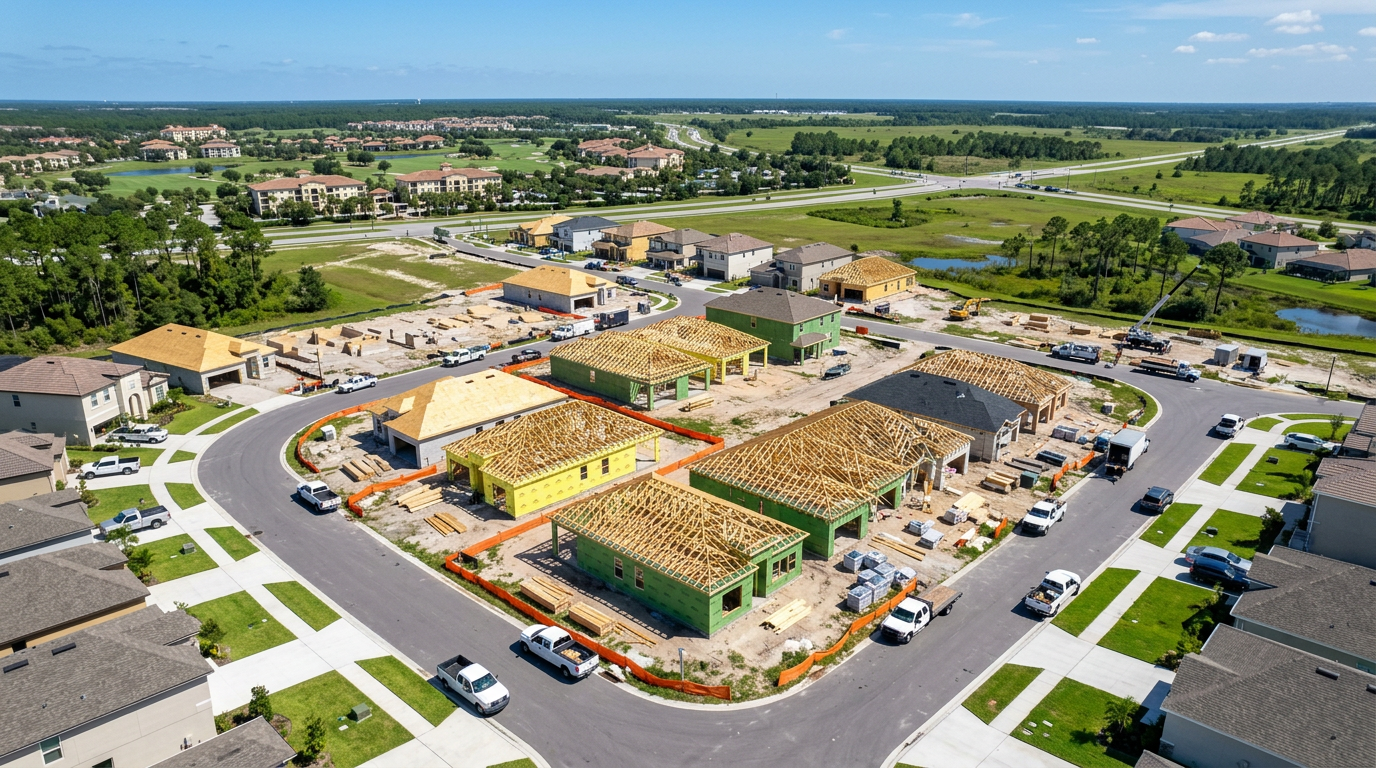
New construction driveways in Davenport face unique demands that differ significantly from replacement projects. The combination of heavy construction traffic, Florida’s sandy soils, and the region’s intense heat requires careful planning and robust construction methods that account for Polk County’s specific conditions.
For residential applications, the standard specification calls for 3 inches of hot mix asphalt over 6 inches of compacted crushed stone base. This exceeds the absolute minimum but provides the durability needed for Davenport’s climate and typical homeowner use patterns. The additional thickness becomes critical when considering that vacation rental properties often experience higher traffic volumes than traditional single-family homes, with guests frequently arriving in larger vehicles and RVs.
Subgrade preparation forms the foundation of long-term performance in Davenport’s unique soil conditions. Polk County’s sandy soils generally provide good drainage but can be unstable when disturbed by construction equipment. The area’s proximity to the Green Swamp creates pockets of organic material that require special attention. Proper proof rolling identifies soft spots that must be addressed before base installation, preventing future settlement issues that plague poorly prepared driveways.
The compacted base material—typically dense-graded crushed stone—must achieve 95% Standard Proctor density to prevent settlement and premature cracking. In Davenport’s high-heat environment, this base layer also serves as thermal protection, reducing temperature fluctuations that reach the subgrade.
Florida’s PG 76-22 binder requirement reflects the state’s high-temperature environment where Davenport’s summer pavement temperatures can exceed 140°F. This specialized binder maintains stability under extreme heat while providing the flexibility needed during cooler winter months when temperatures can drop into the 40s.
The timing of installation becomes crucial in home building projects throughout the greater Orlando area. Heavy construction traffic from concrete trucks, lumber deliveries, and utility installations can destroy a newly paved driveway. Professional builders coordinate paving as one of the final trades, typically after roofing, siding, and major utility work but before final landscaping and cleanup.
Why Davenport’s Construction Environment Requires Special Consideration
Davenport’s position in Central Florida creates specific challenges that builders must address during the driveway installation process. The region’s humid subtropical climate, combined with its role as a vacation home destination serving Disney World visitors, demands construction practices tailored to local conditions.
Summer heat intensity in Polk County requires careful timing of paving operations. During July and August, afternoon temperatures regularly exceed 95°F with heat indices over 110°F. Asphalt placement during peak afternoon temperatures can lead to premature aging and reduced workability. Professional contractors like APC Asphalt Paving schedule paving for early morning hours when ambient temperatures are more manageable and the asphalt maintains proper compaction temperatures longer.
The area’s heavy summer rainfall pattern creates drainage design priorities that differ from other regions. Davenport receives over 50 inches of annual rainfall, with the majority falling during intense thunderstorms between June and September. These storms can dump 2-3 inches in an hour, making proper driveway grading essential to direct water away from foundations while preventing pooling that can undermine pavement edges.
Construction traffic management becomes particularly challenging in Davenport’s vacation home developments near Posner Park and along Highway 27. These properties often feature larger homes with extended construction timelines, meaning more heavy vehicle passes over temporary access routes. Builders must coordinate with paving contractors to establish protection strategies or delay final surfacing until construction traffic ceases.
The tourism-driven economy also influences construction scheduling. Many builders target completion dates that align with peak rental seasons, creating compressed timelines that require precise coordination between trades. Understanding how driveway installation fits into these accelerated schedules helps prevent costly delays that can impact rental income projections.
Soil conditions in Western Polk County vary significantly within short distances due to the area’s geological history. While generally sandy and well-draining, some areas contain clay lenses or organic materials from ancient wetlands that require special handling. Pre-construction soil evaluation helps identify potential issues before they impact the construction timeline.
Coordination Process and Timeline for Builder Integration
Successful new construction driveway projects in Davenport require seamless integration with the overall building timeline. Professional coordination prevents conflicts between trades while ensuring optimal conditions for long-lasting pavement installation that meets the demands of Central Florida’s climate.
Phase 1: Pre-Construction Planning begins during the design phase when builders should involve paving contractors early to review site conditions, access requirements, and utility conflicts. This early coordination identifies potential challenges such as steep grades common in Davenport’s rolling terrain, drainage issues related to the area’s clay layers, or conflicts with underground utilities that could impact both cost and timeline.
Phase 2: Site Preparation and Base Installation typically occurs after rough grading but before foundation work begins. This timing allows heavy equipment access while avoiding conflicts with utility installations. The subgrade receives proof rolling to identify soft spots common in areas near Davenport’s historic wetlands, followed by any necessary stabilization work. Base material placement and compaction follow immediately, creating a stable platform for construction traffic.
Phase 3: Construction Traffic Management spans the entire building process and requires special attention in Davenport’s vacation home market. Professional builders establish designated travel routes that distribute loads across the base while protecting finished areas. Some contractors install a temporary asphalt surface over the base, planning to mill and overlay after construction completion. Others use geotextile fabric and additional base material to create a sacrificial surface that can handle the heavy traffic typical of luxury home construction.
Phase 4: Final Paving occurs as one of the last trades, typically after roofing, siding, and major utility connections but before final grading and landscaping. This timing minimizes damage from construction traffic while allowing proper integration with final site drainage. In Davenport’s climate, this phase can occur year-round, though summer afternoon scheduling requires careful temperature management to avoid the intense heat that can affect asphalt workability.
Quality control checkpoints throughout the process ensure specification compliance and long-term performance. Base compaction testing verifies proper density before asphalt placement. Temperature monitoring during paving ensures proper compaction and long-term performance in Florida’s demanding climate. Final density testing confirms that the completed pavement meets specification requirements.
APC Asphalt Paving works closely with Davenport builders to customize this timeline based on specific project requirements, weather conditions, and construction schedules. Our experience across Polk County, from Haines City to Kissimmee, helps identify potential issues before they impact project completion dates.
Materials and Quality Standards for Long-Term Performance
Driveway installation in Davenport’s demanding environment requires materials specifically selected for Central Florida conditions. Understanding these specifications helps builders make informed decisions that protect their reputation and minimize warranty issues in the competitive vacation rental market.
Hot mix asphalt specifications for residential driveways typically call for a dense-graded mix with PG 76-22 binder designed to handle Davenport’s extreme temperature variations. This high-temperature grade prevents rutting during Florida’s intense summer heat while maintaining flexibility during cooler periods when temperatures can drop 50 degrees overnight. The aggregate blend includes crushed stone for stability and sand for workability, with careful attention to gradation that promotes proper compaction in high-heat conditions.
Base material selection focuses on crushed stone or processed gravel that meets Florida Department of Transportation specifications and can handle the unique challenges of Polk County soils. The material must be properly graded to achieve maximum density when compacted, with minimal flat or elongated particles that could create weak points under heavy vacation rental traffic. Proper base thickness—typically 6 inches for residential applications—provides the foundation for long-term performance in Davenport’s sandy soil conditions.
Compaction requirements ensure that both base and asphalt achieve specified densities despite Central Florida’s challenging conditions. Base material must reach 95% Standard Proctor density to prevent settlement in Davenport’s variable soil conditions. Asphalt compaction targets 94% of theoretical maximum density, achieved through proper rolling while the material remains above 185°F—a critical consideration during Florida’s hot summer months.
Quality assurance testing verifies specification compliance throughout the process and provides documentation crucial for warranty protection. Proof rolling identifies subgrade issues before base placement, particularly important in areas near Davenport’s historic wetlands. Nuclear density testing confirms proper base compaction. Core samples from completed pavement verify asphalt density and thickness. These tests provide documentation that protects both builder and contractor from future warranty claims.
Drainage integration requires careful coordination between paving and site grading to handle Davenport’s intense summer rainfall. Proper crown and cross-slope direct water away from the pavement surface while maintaining smooth transitions to adjacent areas. Edge restraint prevents lateral movement that could cause cracking or settlement, particularly important in sandy soil conditions.
The investment in quality materials and proper installation pays dividends through reduced maintenance requirements and enhanced property values in Davenport’s competitive vacation rental market where curb appeal directly impacts booking rates and rental income.
Maintenance Planning and Long-Term Performance Expectations
Understanding maintenance requirements helps Davenport builders set proper expectations with homeowners while protecting their own warranty obligations. Proper maintenance planning begins during the construction phase and continues throughout the pavement’s service life in Central Florida’s demanding climate.
Initial curing period requires protection from heavy loads and chemical spills common in vacation rental properties. New asphalt continues to cure for several months after installation, gradually achieving full strength and chemical resistance. Homeowners should avoid parking heavy vehicles or RVs on new pavement for at least 30 days—particularly important in Davenport’s vacation home market where boat trailers and large SUVs are common among Disney World visitors.
Preventive maintenance scheduling in Central Florida differs from northern climates due to year-round UV exposure and thermal cycling that can exceed 100-degree daily temperature swings. Sealcoating applications every 2-3 years provide UV protection and enhance appearance—particularly valuable for vacation rental properties where curb appeal directly impacts booking rates and rental income. The timing of sealcoating applications should avoid Florida’s rainy season for optimal curing conditions.
Crack sealing becomes critical in preventing water infiltration that can undermine the base structure during Davenport’s intense summer thunderstorms. While the area doesn’t experience freeze-thaw cycles, thermal expansion and contraction from extreme daily temperature variations still create stress points that require attention. Early intervention prevents minor cracks from becoming major repairs that could impact rental property income.
Performance expectations for properly constructed driveways in Davenport range from 15-20 years with appropriate maintenance, depending on traffic volume and exposure to the area’s intense UV radiation. Factors affecting longevity include traffic volume from vacation rental guests, maintenance consistency, and exposure to chemicals such as fertilizers or pool chemicals common in residential settings.
Warranty considerations should clearly define responsibilities between builder, contractor, and homeowner, particularly important in Davenport’s vacation rental market where properties may have absentee owners. Typical warranties cover material and workmanship defects but exclude damage from misuse, lack of maintenance, or settlement due to factors beyond the contractor’s control. Clear documentation of construction practices and material specifications protects all parties.
APC Asphalt Paving provides comprehensive maintenance guidance to Davenport builders and homeowners, helping protect the investment in quality construction while maintaining the aesthetic appeal that enhances property values in Polk County’s competitive vacation rental market.
New construction driveway installation in Davenport requires expertise that goes far beyond simply laying asphalt. The coordination between trades, understanding of local climate challenges, and attention to long-term performance factors separate professional installations from those that become costly problems. For builders working in Western Polk County’s booming vacation home market, partnering with experienced contractors ensures project success and protects valuable client relationships.
The investment in proper subgrade preparation, quality materials, and professional installation pays dividends through reduced maintenance requirements, enhanced property values, and satisfied homeowners. In Davenport’s competitive home building market serving Disney World visitors and vacation rental investors, these quality differentiators help builders command premium pricing while building reputations for excellence.
APC Asphalt Paving brings over 15 years of experience coordinating with builders across Polk County, from Davenport to Lakeland and throughout Central Florida. Owner John Wells and our team understand local conditions, maintain commitment to quality construction practices, and have a proven track record of successful builder partnerships that make us the trusted choice for driveway installation projects that enhance property values and stand the test of time.
Ready to discuss your next project? Contact APC Asphalt Paving at (𝟴𝟬𝟬) 𝟳𝟳𝟵-𝟬𝟳𝟲𝟳 for a free consultation and estimate. Let us show you how professional coordination and quality construction can streamline your building process while delivering the lasting results your clients expect in Davenport’s demanding market.
