Puddles That Won’t Go Away: Low Spot Repair in Arcadia Parking Lots
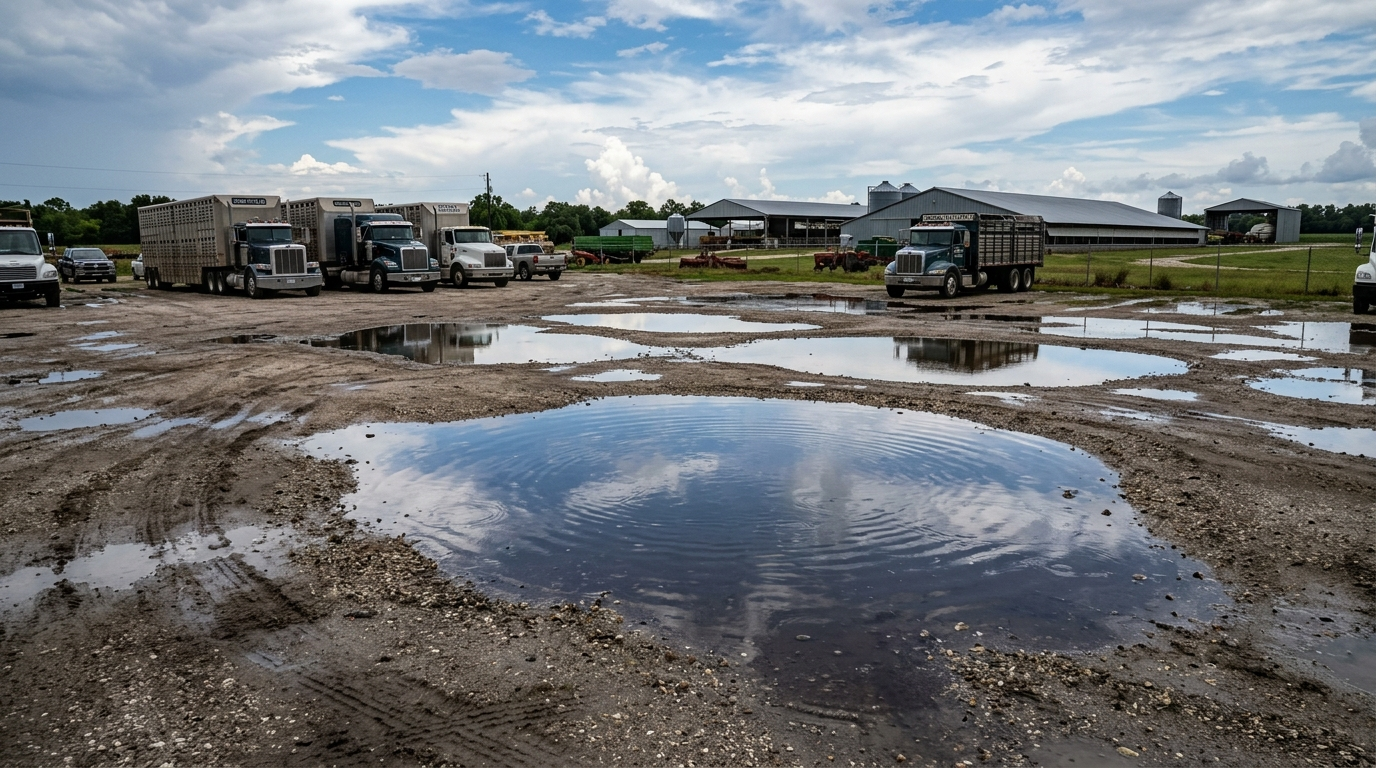
If you’ve noticed puddles that linger for days after rain in your Arcadia parking lot, you’re dealing with more than just a minor inconvenience. These persistent water collections, often called “birdbaths” in the paving industry, signal underlying structural problems that worsen over time.
In DeSoto County’s cattle country, where Arcadia serves as the agricultural hub, parking lot drainage issues create serious challenges for local businesses. From cattle auction facilities along State Road 70 to agricultural supply stores downtown, standing water threatens both operations and customer safety.
APC Asphalt Paving has been solving these drainage challenges throughout Arcadia and Avon Park for years. Owner John Wells understands how Central Florida’s intense summer storms and year-round humidity create unique demands on parking lot surfaces, especially in agricultural areas where heavy truck traffic is common.
This guide explains what causes these stubborn low spots, explores proven repair methods, and helps you determine whether your parking lot needs simple leveling or complete reconstruction.
How Arcadia’s Climate Creates Drainage Nightmares
Central Florida’s weather patterns make proper parking lot drainage absolutely critical. During summer months, Arcadia receives intense afternoon thunderstorms that can dump 2-3 inches of rain in under an hour, overwhelming poorly designed drainage systems.
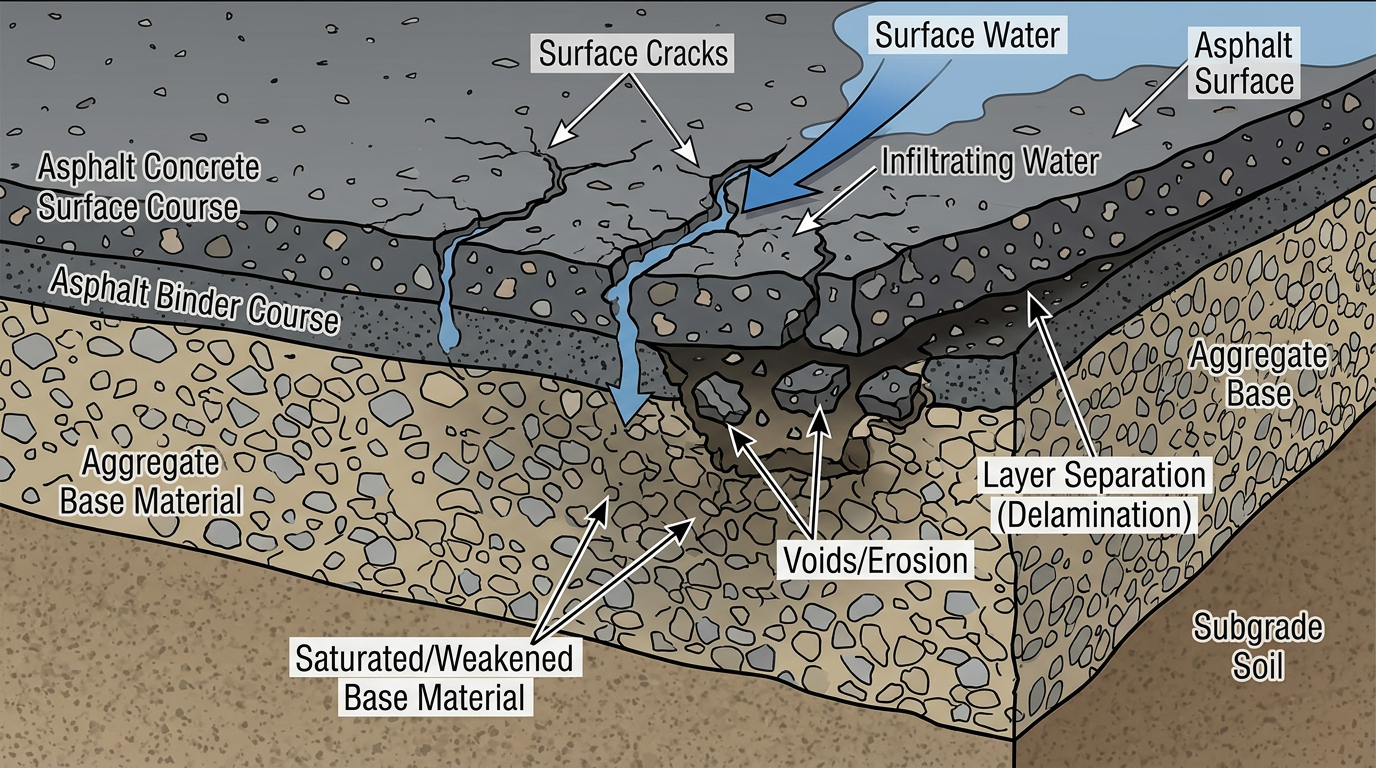
Temperature and moisture cycles accelerate asphalt deterioration around the Peace River area. When water sits in depressions, it penetrates through small cracks and saturates the base material beneath. Florida’s year-round warmth means this moisture never fully evaporates, creating a cycle of base weakening and further settlement.
Agricultural traffic patterns common throughout DeSoto County compound these problems. Heavy trucks serving cattle operations and farm supply businesses create concentrated loading that can cause initial depressions. The combination of 80,000-pound cattle haulers and Florida’s heat creates perfect conditions for pavement failure.
The relatively flat topography around Arcadia presents additional challenges. Unlike areas with natural slopes, many local properties require careful engineering to achieve the minimum 2% grade necessary for proper surface drainage. Without adequate slope, even minor depressions become permanent water collection points that grow larger with each storm.
What Really Causes Low Spots and Birdbaths
Understanding the root causes helps determine the most effective repair approach. Inadequate slope represents the most common issue—parking lots need minimum 1% grade (preferably 2%) to drain effectively. When original construction fails to establish proper drainage grades, water naturally collects in the lowest areas.
Base saturation and weakening occurs when water infiltrates through surface cracks or edges. This is particularly problematic in Arcadia’s sandy soil conditions, where water can quickly reach and saturate the base layer. Saturated granular base materials can lose 50% or more of their load-bearing capacity.
Under repeated traffic loading, this saturated base creates a pumping action where fine particles and water eject up through cracks. This pumping action creates voids beneath the pavement surface, leading to settlement and depression formation.
Structural failure develops when the pavement structure cannot support applied loads. This commonly happens when heavy agricultural vehicles exceed the original design parameters, or when base preparation was inadequate during initial construction. The result is permanent deformation that creates water collection points.
Poor edge drainage allows water to infiltrate along pavement perimeters. Without proper base extension beyond the pavement edge or adequate edge drains, water enters the structural section and weakens the foundation, leading to edge settlement and low spot development.
Mill and Fill: The Most Common Repair Solution
Mill and fill operations provide the most cost-effective solution for moderate low spot problems. This process involves removing the top 1-3 inches of existing asphalt using specialized milling equipment, then placing new hot mix asphalt to restore proper drainage grades.
The milling process creates a textured surface that bonds excellently with new asphalt. APC Asphalt Paving uses precision milling techniques to remove just enough material to eliminate the depression while maintaining structural integrity. This approach works particularly well when the underlying base remains sound.
Grade correction during mill and fill allows contractors to adjust surface elevations strategically. By varying the milling depth and new asphalt thickness, we can eliminate birdbaths while establishing positive drainage toward collection points or property edges. This technique is especially effective for parking lots serving Arcadia’s downtown business district.
Proper material placement ensures long-lasting repairs. Quality hot mix asphalt placement at proper temperatures, followed by thorough compaction with appropriate equipment, creates a durable repair that integrates seamlessly with existing pavement. Tack coat application between the milled surface and new asphalt prevents delamination that could recreate drainage problems.
When Complete Reconstruction Becomes Necessary
Extensive base failure requires complete reconstruction rather than surface repairs. When you see pumping—where fine particles and water eject through cracks under wheel loads—the base has lost structural integrity and must be replaced.
Full-depth patching involves square-cutting the failed area at least 6-12 inches beyond visible distress, excavating to stable material, and rebuilding the entire pavement structure. This process addresses root causes rather than just symptoms.
This comprehensive approach is often necessary for agricultural facilities around Arcadia where heavy cattle trucks have exceeded the original pavement design capacity. The combination of load and Florida’s heat can cause complete structural failure that surface repairs cannot address.
Base material replacement may require removing and replacing saturated or contaminated base materials. In DeSoto County’s agricultural areas, organic contamination from cattle operations can compromise base stability. Clean, properly graded base materials restore load-bearing capacity and prevent future settlement.
Drainage system integration during full replacement allows installation of subsurface drainage where needed. Edge drains, catch basins, or underdrains can be incorporated to manage groundwater and prevent future base saturation—particularly important given Arcadia’s seasonal water table fluctuations.
Preventing Future Low Spot Problems
Regular maintenance proves far more cost-effective than major reconstruction. Sealcoating every 2-3 years protects against water infiltration, while prompt crack sealing prevents moisture from reaching the base layer. For agricultural facilities around Arcadia, this maintenance becomes even more critical due to heavy truck traffic and chemical exposure from farm operations.
Proper drainage design must account for local rainfall patterns and soil conditions. Central Florida’s sandy soils generally drain well, but clay layers or seasonal high water tables can create challenges. Professional site evaluation identifies these conditions before they cause pavement failure.
Load management helps prevent initial depression formation. Understanding your pavement’s design capacity and managing heavy vehicle traffic patterns can significantly extend pavement life. This is particularly important for businesses serving Arcadia’s cattle industry, where truck weights can vary dramatically.
Professional Assessment Makes the Difference
Determining whether your Arcadia parking lot needs simple patching, mill and fill repair, or complete reconstruction requires professional evaluation. Factors like base condition, drainage patterns, traffic loading, and soil conditions all influence the most appropriate repair method.
Visual inspection can identify obvious problems, but subsurface conditions require professional assessment. APC Asphalt Paving uses proven evaluation techniques to determine the extent of base damage and recommend the most cost-effective repair approach.
Core sampling may be necessary to evaluate base conditions in severely damaged areas. This testing reveals moisture content, contamination levels, and structural integrity that surface inspection cannot determine.
Don’t let persistent puddles damage your Arcadia business operations or create safety hazards for customers. APC Asphalt Paving brings decades of experience addressing drainage challenges throughout DeSoto County’s agricultural community, from cattle facilities along Highway 17 to downtown commercial properties near Oak Ridge Cemetery.
Our comprehensive approach evaluates underlying causes, not just surface symptoms, ensuring repairs that withstand Central Florida’s demanding climate and heavy agricultural traffic. Whether your parking lot needs targeted mill and fill work or complete reconstruction, we provide solutions tailored to your specific operational needs.
John Wells and the APC team understand the unique challenges facing Arcadia businesses, from seasonal flooding concerns to the heavy loads associated with cattle operations. We’ve successfully repaired parking lots for agricultural facilities, retail centers, and municipal properties throughout the Peace River region.
Contact APC Asphalt Paving today for a free drainage evaluation and repair estimate. We serve Arcadia, Avon Park, and surrounding DeSoto County communities with professional parking lot repair services designed for Florida’s demanding environment. Call now to eliminate those persistent birdbaths permanently and protect your pavement investment.
Visit our website at apcasphaltpaving.com or call (𝟴𝟬𝟬) 𝟳𝟳𝟵-𝟬𝟳𝟲𝟳 for immediate service throughout Central Florida’s agricultural corridor.
